


Cracking the Code: What Your Check Engine Light is Actually Trying to Tell You
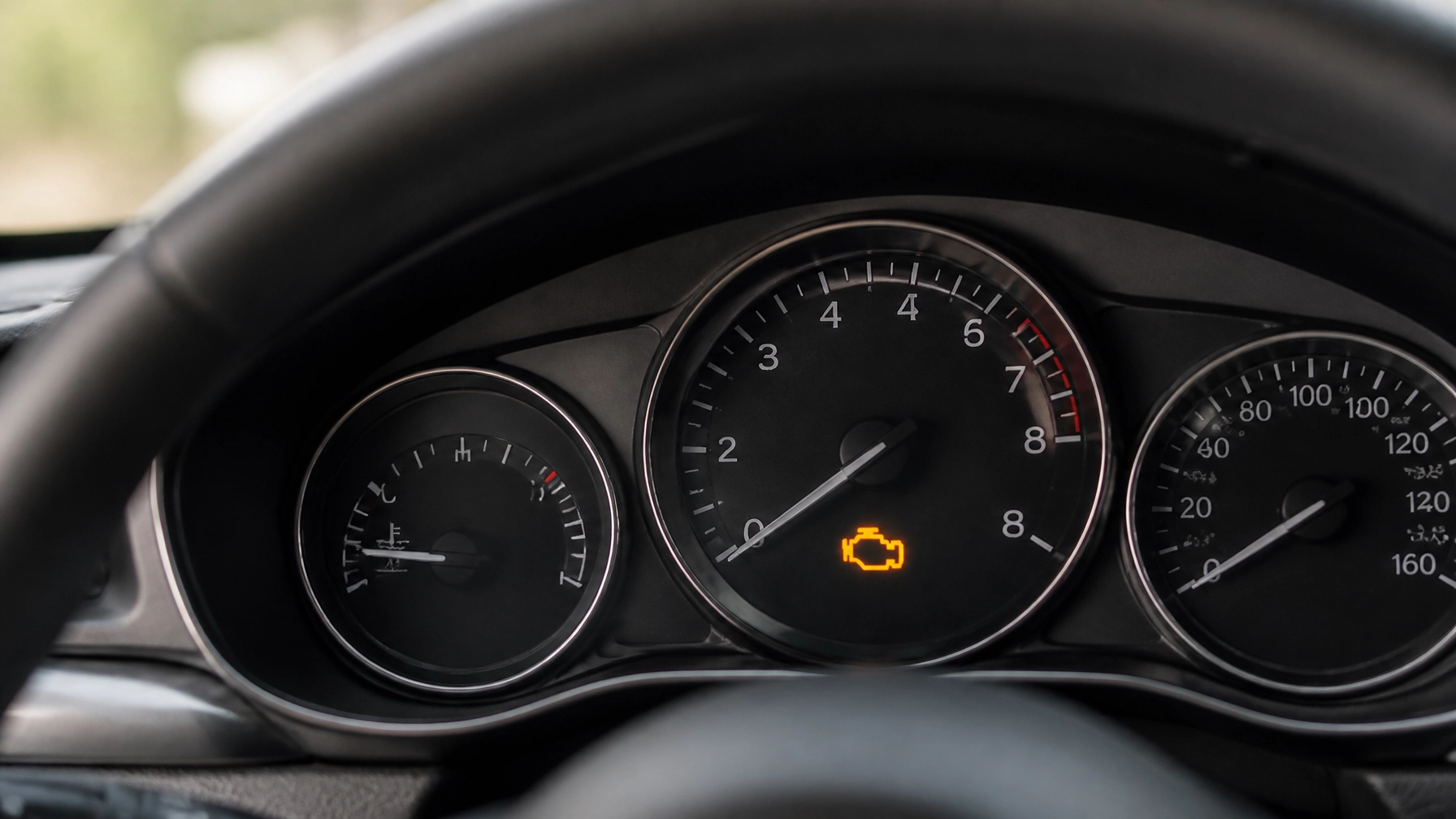
It usually happens at the most inconvenient moment. You’re cruising down Highway 99, maybe heading home after a long day or planning a weekend trip, when that little orange silhouette of an engine flickers to life on your dashboard. Your heart sinks just a little. For some, it’s a moment of pure panic; for others, it’s a nuisance to be ignored until “later.”
But here at Grumpy’s Hot Rod & Auto Repair, we like to think of the check engine light (CEL) as your car’s way of tapping you on the shoulder. It isn’t necessarily a death sentence for your engine, but it is a signal that something in the complex harmony of sensors, valves, and mechanical components isn’t performing the way it should. Understanding what that light is trying to tell you can be the difference between a quick, affordable fix and a major headache down the road.
The Mystery of the Orange Glow
Modern vehicles are essentially rolling computers. Gone are the days when a mechanic could diagnose every issue just by listening to the rhythm of the idle or the smell of the exhaust: though we still do plenty of that too! Today, your car’s Engine Control Unit (ECU) constantly monitors dozens of data points. When one of those points falls outside of the “normal” range, the ECU logs a Diagnostic Trouble Code (DTC) and turns on the light to let you know.
This system is called OBD-II (On-Board Diagnostics, second generation), and it’s been the standard for every car sold in the U.S. since 1996. While the light itself is universal, the reasons behind it can vary wildly. It’s a common misconception that the light always means a major engine failure. In reality, it could be something as simple as a loose gas cap or as complex as a failing catalytic converter.
Steady vs. Flashing: Knowing the Difference
Before you dive into the “why,” you need to know the “how urgent.” There are generally two ways a check engine light will behave, and knowing the difference is vital for your safety and your wallet.
The Steady Light
If the light is on but staying steady, your car has detected a problem that needs attention, but it isn’t necessarily an immediate emergency. You don’t need to pull over on the shoulder and call a tow truck right this second, but you shouldn’t wait weeks to address it. A steady light usually points toward emissions issues or sensor failures that will eventually hurt your fuel economy or cause more damage if left alone.
The Flashing Light
If that orange light starts blinking, it’s time to pay attention. A flashing check engine light usually indicates a “severe misfire.” This means unburned fuel is getting into your exhaust system, where it can quickly overheat and destroy your catalytic converter: a part that is notoriously expensive to replace. If you see a flashing light, you should reduce your speed, avoid heavy acceleration, and get into a shop for a check engine light diagnosis in Yuba City as soon as humanly possible.
The Usual Suspects: Why the Light Comes On
Over the years, our team of ASE-certified mechanics has seen just about every code in the book. While every car is different, there are a handful of common culprits that trigger that dreaded dashboard glow more often than anything else.
1. The Loose or Damaged Gas Cap
Believe it or not, this is one of the most common reasons for a CEL. Your car’s fuel system is a sealed environment designed to prevent gasoline vapors from escaping into the atmosphere. If the gas cap is loose, cracked, or simply missing, the system detects a leak and throws a code. It’s always the first thing you should check. If the light goes off after a few days of driving with a tightened cap, you’ve saved yourself a trip to the shop!
2. Failing Oxygen (O2) Sensors
Your car typically has two to four oxygen sensors that monitor how much unburned oxygen is in the exhaust. This data helps the computer adjust the air-fuel mixture for maximum efficiency. Over time, these sensors get coated in carbon or simply wear out. A bad O2 sensor can drop your fuel economy by as much as 40%, so replacing it is an investment that pays for itself at the gas pump.
3. The Mass Airflow (MAF) Sensor
The MAF sensor measures the amount of air entering the engine to determine how much fuel is needed to run efficiently. If this sensor is dirty or failing, you might notice your car hesitating under acceleration or idling roughly. This is a common issue for drivers in dusty environments or those who use low-quality air filters.
4. Worn Out Spark Plugs and Wires
Spark plugs are the heart of the combustion process. If they are worn, they won’t ignite the fuel properly, leading to a misfire. This is a standard part of general maintenance in Yuba City, but it’s easy to overlook until the check engine light forces the issue.
5. Catalytic Converter Failure
The catalytic converter is responsible for turning harmful carbon monoxide into less harmful emissions. Usually, these don’t fail on their own; they fail because of a secondary issue: like a bad spark plug or a leaking head gasket: that was ignored for too long. This is the perfect example of why “ignoring the light” ends up costing you more in the long run.

Why a “Code Reader” Isn’t a Mechanic
We often have customers come in saying, “I went to a big-box parts store and they scanned it for free. They said I need a new O2 sensor.” While those free scans are a good starting point, they only tell you where the computer is seeing a problem, not necessarily what the problem is.
Think of it like this: If you have a fever, a thermometer tells you that your temperature is high. It doesn’t tell you if you have the flu, a sinus infection, or heatstroke. The code is the “fever.” Our job during a diagnostic service in Yuba City is to find the infection.
For example, a code for a “lean” fuel mixture might make you think you need a new fuel pump. But a skilled mechanic might find a tiny vacuum leak or a cracked rubber hose that costs five dollars to fix. Without proper engine repair in Yuba City, you could spend hundreds of dollars on parts you didn’t actually need: what we call “throwing the parts cannon” at a car.
The Long-Term Cost of Ignoring the Light
It can be tempting to put a piece of black tape over the light and keep on driving, especially if the car seems to be running fine. But that light is often a warning of a small problem that is slowly killing a more expensive part.
- Fuel Efficiency: Most CEL issues relate to the air-fuel mixture. When the system isn’t running perfectly, you’re burning more gas than necessary.
- Emissions Compliance: If you have a check engine light on, you won’t pass your California smog check. Whether you’re a daily driver or managing a fleet that needs a Clean Truck Check, that light is a non-starter.
- Safety: Sometimes, the code isn’t about the engine at all. It could be related to the transmission or even an electrical issue that could leave you stranded at the worst possible time.
What to Expect at Grumpy’s
When you bring your vehicle to us for a check engine light diagnosis in Yuba City, we don’t just pull a code and hand you a bill. We use high-end diagnostic equipment to look at “live data”: watching how your sensors are reacting in real-time while the engine is running. We perform visual inspections of the affected systems to look for frayed wires, loose hoses, or signs of wear that a computer scan might miss.
Our goal is always to get you back on the road safely and affordably. Whether it’s a classic hot rod that needs some fine-tuning or a modern SUV that’s throwing a mysterious code, we treat every car with the same level of care and expertise.
Don’t Let the Mystery Linger
The check engine light doesn’t have to be a source of stress. In many cases, the fix is simpler and cheaper than you might expect. By addressing the light early, you protect your engine, save money on gas, and ensure that your vehicle remains reliable for years to come.
If that orange glow is staring you in the face, don’t wait for it to start flashing. Stop by and see us at Grumpy’s Hot Rod & Auto Repair. We’ll crack the code, explain exactly what’s going on in plain English, and get you back to enjoying the drive.
Ready to clear that dashboard? Give us a call or stop by the shop today for professional auto repair in Yuba City that you can trust.
Related Posts
Precision Power: Why Performance Enthusiasts Choose Dyno Tuning Near Me
If you’ve spent any time working on cars around Yuba City, you know the feeling of finishing a big upgrade. You’ve finally bolted on those high-flow headers, swapped in a more aggressive cam, or maybe you’ve stepped up to a…

The Life of Your Gears: When to Consider Transmission Repair in Yuba City
If there is one part of your car that works harder than almost anything else, it’s the transmission. Whether you’re cruising down Highway 99 in a late-model SUV or taking your vintage 1969 Camaro out for a Saturday run through…
Stopping Power Matters: 5 Signs Your Brakes Need Professional Attention
There is a certain "sixth sense" you develop as a driver. You know exactly how your car should feel when you turn the key, how it should sound when it idles, and, most importantly, how it should behave when you…