


Check Engine Light On? Common Mistakes Drivers Make (And What To Do Instead)

You’re cruising down Highway 99, the morning sun glinting off your polished chrome, and the rhythmic, deep-throated growl of your exhaust is pure music to your ears. Your machine feels alive: a thundering heart of steel and fire responding to every twitch of your foot. Then, in the corner of your eye, it happens. A steady, amber glow ignites on the dash. The dreaded “Check Engine” light.
Your heart sinks. The adrenaline of the drive is instantly replaced by a nagging sense of dread. Is it a loose wire? A dying sensor? Or is your prized engine about to turn itself into an expensive paperweight?
At Grumpy’s Hot Rod & Auto Repair, we’ve seen that look on drivers’ faces a thousand times. Your car is more than just transportation; it’s a statement of personality, a rolling work of art that deserves the best care. But when that little light pops on, many folks panic and make mistakes that end up costing them time, money, and sanity.
Let’s pull into the bay, grab a coffee, and talk about the common pitfalls drivers fall into when the “Check Engine” light makes an unwelcome appearance: and exactly what you should do to keep your machine in peak condition.
Mistake #1: The “Ostrich” Strategy (Ignoring the Light)
The most common mistake: and arguably the most dangerous: is simply pretending it isn’t there. We get it. If the car is still idling smooth, the gears are shifting like butter, and there’s no smoke billowing out the back, it’s easy to tell yourself it’s just a “glitch.”
But ignoring a Check Engine Light (CEL) is like an athlete ignoring a dull ache in their knee. You might be able to finish the race today, but you’re setting yourself up for a catastrophic failure tomorrow. That light is your car’s way of saying its internal chemistry is off. Maybe the air-fuel ratio is leaning out, or perhaps a cooling system component is starting to fail.
Even if the car feels fine, a triggered CEL often means the vehicle has entered a “limp mode” or is running on a generic “safe” map. This kills your fuel economy and can lead to carbon buildup that eventually chokes the life out of your engine. In the long run, ignoring a $100 sensor repair can lead to a $3,000 engine or transmission service.
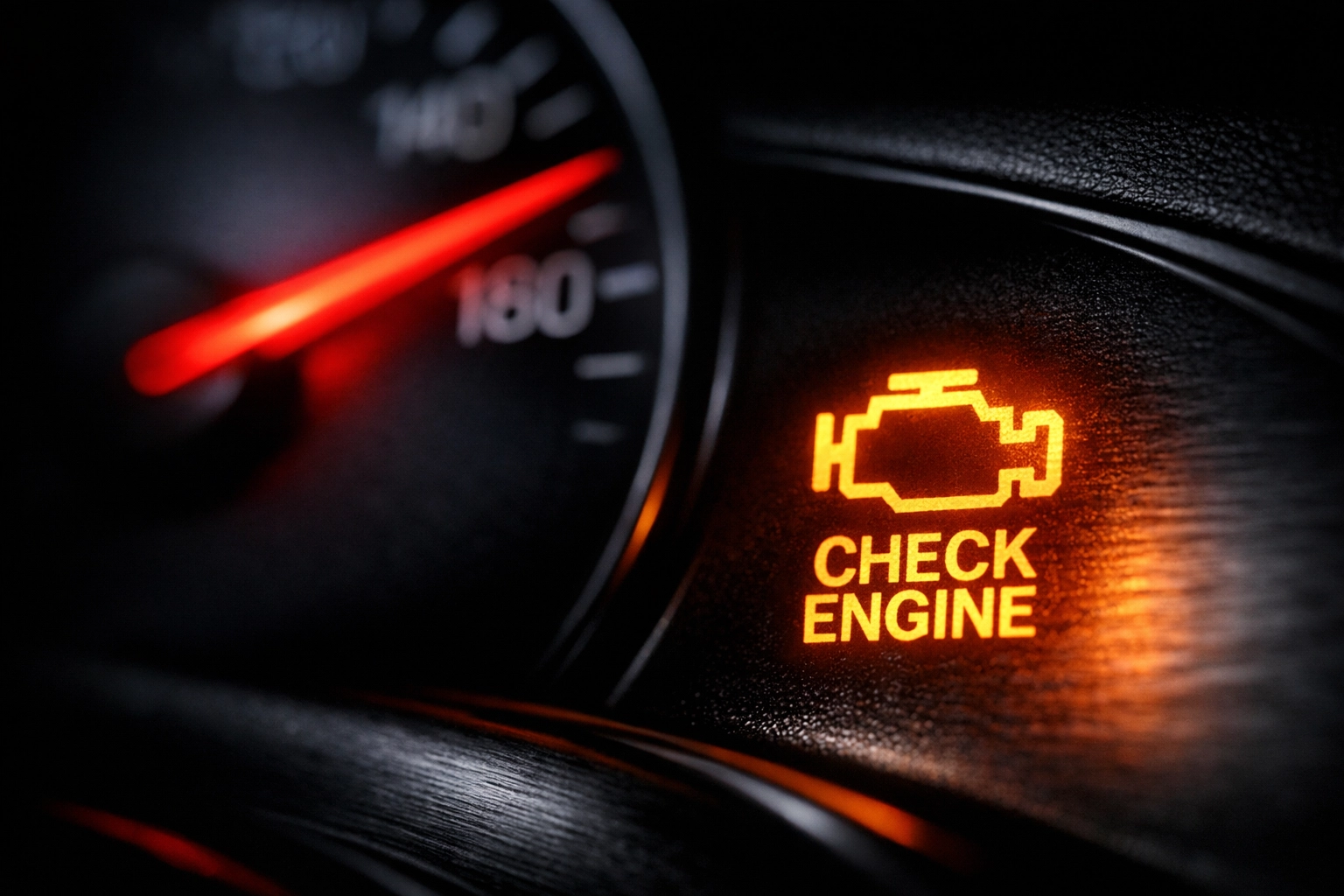
Mistake #2: Firing the “Parts Cannon”
When the light comes on, some DIY enthusiasts head straight to the local auto parts store, get a free code scan, and immediately buy whatever part the code mentions. If the code says “Oxygen Sensor,” they buy an oxygen sensor. If it says “P0420 – Catalytic Converter,” they start pricing out expensive exhaust components.
We call this “firing the parts cannon”: aiming money at the car and hoping something hits the target.
Here’s the reality: over 90% of check engine light repairs are misdiagnosed or unnecessary when handled this way. A code doesn’t tell you a part is broken; it tells you a system is reading outside of its normal parameters. An O2 sensor code could be caused by a vacuum leak, a frayed wire, or even a bad ground. Replacing the sensor won’t fix the underlying issue, and you’ll be right back where you started: only with a lighter wallet.
Mistake #3: Trusting “Dr. Google” and Forums Exclusively
We love the car community, and forums are a great place to swap stories about flat tappet cams or ZDDP additives. However, diagnosing a modern engine via a Google search is a 50/50 gamble at best. Every car has its own history, its own wear patterns, and its own unique set of circumstances.
What worked for a guy in a forum in 2014 might not apply to your specific build or daily driver. Relying on internet guesswork instead of proper diagnostics is a recipe for frustration. Your car is a complex symphony of mechanical and electronic components; it deserves a diagnosis tailored to its specific needs, not a one-size-fits-all internet answer.
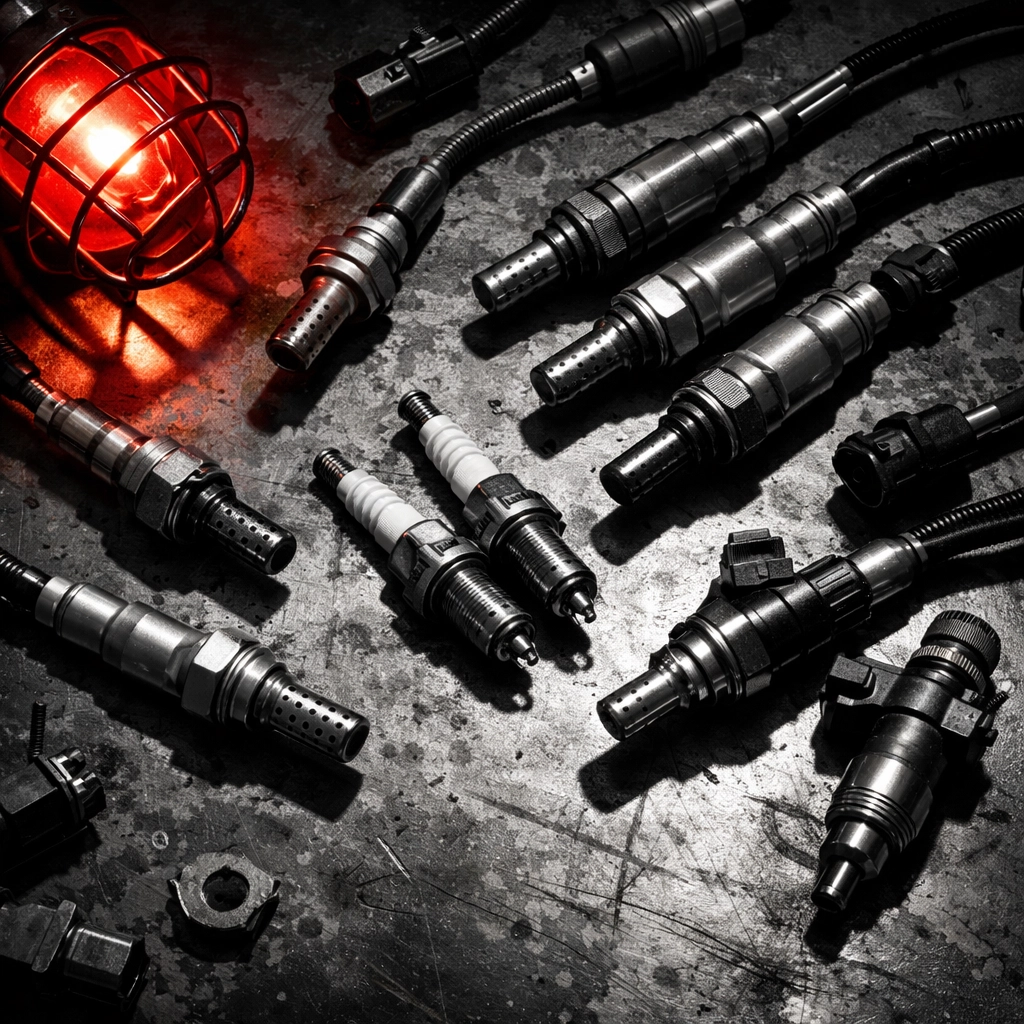
What To Do Instead: The Grumpy’s Guide to CEL Sanity
When that light glows, don’t panic. Follow these steps to handle it like a pro.
1. Check the Basics (The Gas Cap Trick)
Believe it or not, one of the most common reasons for a check engine light is a loose, cracked, or faulty gas cap. Your car’s evaporative emission (EVAP) system is incredibly sensitive to pressure leaks. If the cap isn’t clicked into place or the seal is dried out, the system thinks there’s a massive leak and throws a code.
Before you do anything else, pull over, tighten your gas cap, and see if the light clears after a few drive cycles. If you need a high-quality replacement or other maintenance supplies, you can always check out our shop for the gear we trust.
2. Perform a “Sensory Audit”
Turn off the radio. Put the windows down. How does the car feel?
- Smell: Do you smell raw fuel? That could indicate an injector issue or a serious leak. Do you smell “sweet” syrup? That’s coolant, which could mean your heating and cooling system is under duress.
- Sound: Listen for new ticks, whistles, or thumps. A whistling sound often points to a vacuum leak: a classic CEL trigger.
- Touch: Does the steering wheel vibrate at idle? Is there a hesitation when you step on the gas?
3. Use an OBD2 Scanner (But Use It Wisely)
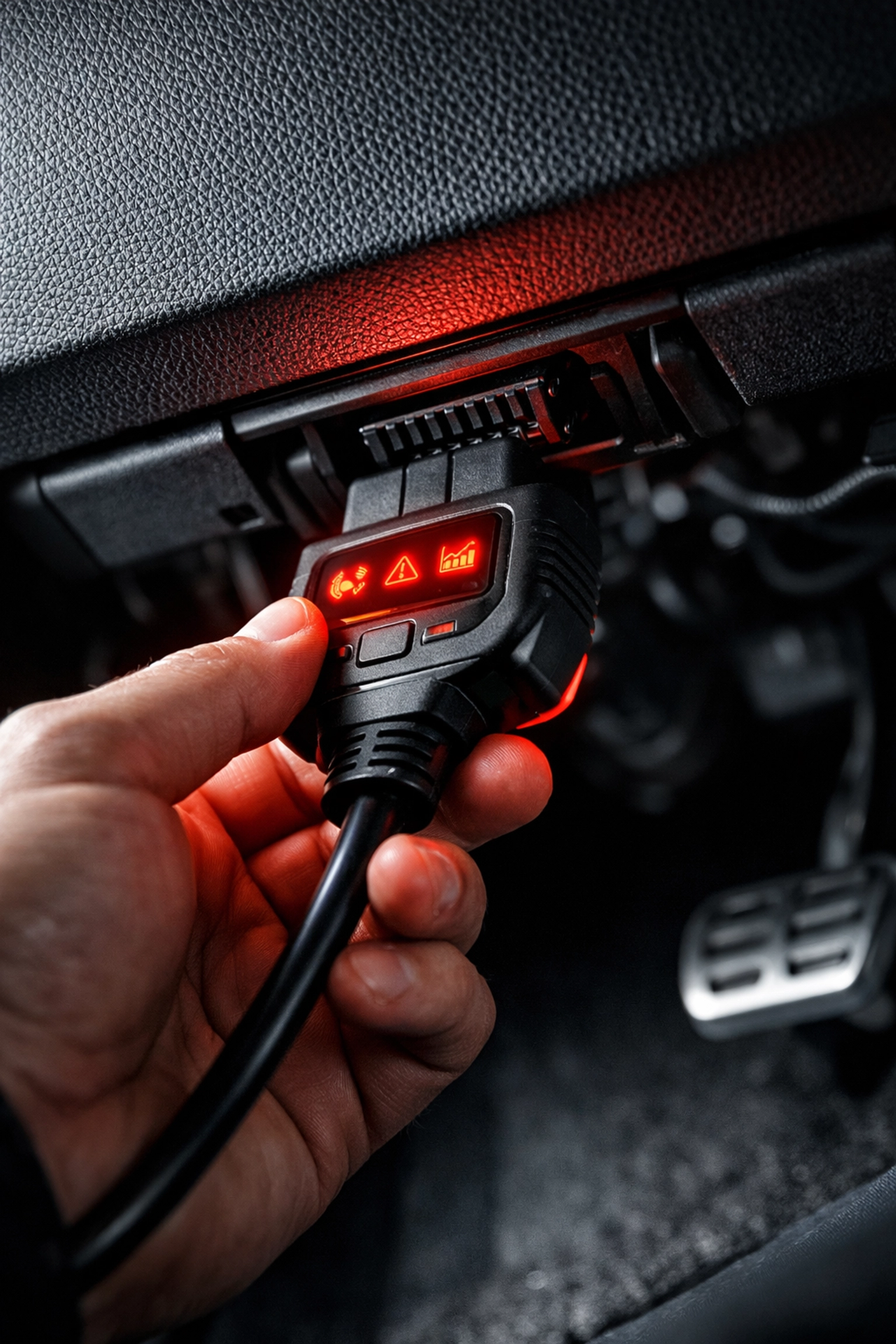
If you’re a hobbyist, owning a basic OBD2 scanner is a great way to stay connected to your machine’s digital brain. It plugs into the port under your dash (on most cars built after 1996) and gives you the fault code.
Use this code as a starting point, not a final answer. If you see a code related to your electrical or battery system, it might just be a sign that your battery is struggling to provide clean voltage to the sensors.
When to Pull Over Immediately: The Blinking Light
There is one scenario where you should absolutely not “drive it home.” If your check engine light is blinking (usually red or orange), this indicates a “catalyst-damaging misfire.”
This isn’t a suggestion; it’s an emergency. A blinking light means unburned fuel is likely being dumped into your exhaust, where it will ignite inside your catalytic converter, melting the expensive internals in a matter of minutes. If the light flashes, pull over safely, shut it down, and call for a tow. Protecting your “prized machine” from a total meltdown is worth the cost of the tow truck.
The Grumpy’s Difference: Expert Diagnostics
Modern cars are rolling computers, and vintage hot rods with EFI conversions are no different. To truly understand why a light is on, you need more than a code reader: you need live data streaming, pressure tests, and the experienced eyes of a mentor-mechanic who knows how these systems interact.
At Grumpy’s Hot Rod & Auto Repair, we don’t just clear codes; we find the root cause. Whether it’s a finicky mass airflow sensor or a complex timing issue, we treat your vehicle with the respect it deserves. We balance the “cool factor” of performance with the “no-nonsense” pragmatism of long-term reliability.
We want your car to be a reliable link to the open road, not a source of stress in your driveway. From brake and suspension services to deep-dive engine diagnostics, we ensure that every time you turn the key, the only thing you hear is the roar of potential: not the silent scream of a dashboard warning light.
Keeping the Shine While You Wait
While we’re under the hood figuring out those pesky codes, it’s a great time to think about the rest of your vehicle’s health. A well-maintained car is a happy car, inside and out. If you’re waiting on a diagnostic report, why not treat your ride to some premium care?
Check out some of our favorite in-house products to keep your machine looking as good as it runs:
- Grumpy’s High Performance Interior Detailer: Because the view from the driver’s seat should be spotless.
- Grumpy’s High Performance Tire Gel: To give your wheels that “show-ready” pop.
- Grumpy’s High Performance Water Spot Remover: Perfect for those Yuba City mornings when the dew leaves a mark on your paint.
Conclusion: You’re Not Alone in the Garage
The check engine light doesn’t have to be the end of your road trip. It’s just a conversation starter between you and your car. By avoiding the temptation to ignore it or throw random parts at it, you’re acting as the steward of a classic piece of machinery.
Don’t let a mysterious orange glow dim your passion for driving. If your light is on and you want a diagnosis you can trust: one delivered with a friendly smile and a wealth of technical expertise: come see us. We’ll get you back on the road, where the only thing you have to worry about is which scenic route to take home.
Swing by Grumpy’s Hot Rod & Auto Repair in Yuba City. Let’s get that heart of steel beating perfectly again.
Related Posts
Tires Wearing Unevenly? 5 Reasons It Isn’t Just Your Alignment
You check your tires and spot a bald strip along one edge, or notice one tire is wearing out months before the others. That’s frustrating, especially when you’re facing the cost of replacement tires sooner than expected. Alignment can cause…

Battery vs. Alternator vs. Starter: Which One Is Killing Your Morning Commute?
You’re ready to leave, but your car answers with a click, a slow groan, or nothing at all. A no-start is frustrating, and it can be expensive if you replace the wrong part. The battery, alternator, and starter all play…

7 Warning Signs Your Brakes Are About to Fail (and the Real Cost of Waiting)
Your brakes are the one system you cannot afford to ignore. You can postpone a cosmetic repair or drive a little longer before scheduling a maintenance item, but braking problems are different. Every commute, school run, grocery trip, and stop-and-go…