


How to Choose the Best Cooling Upgrades: Electric Fans vs. High-Flow Radiators for Yuba City Summers
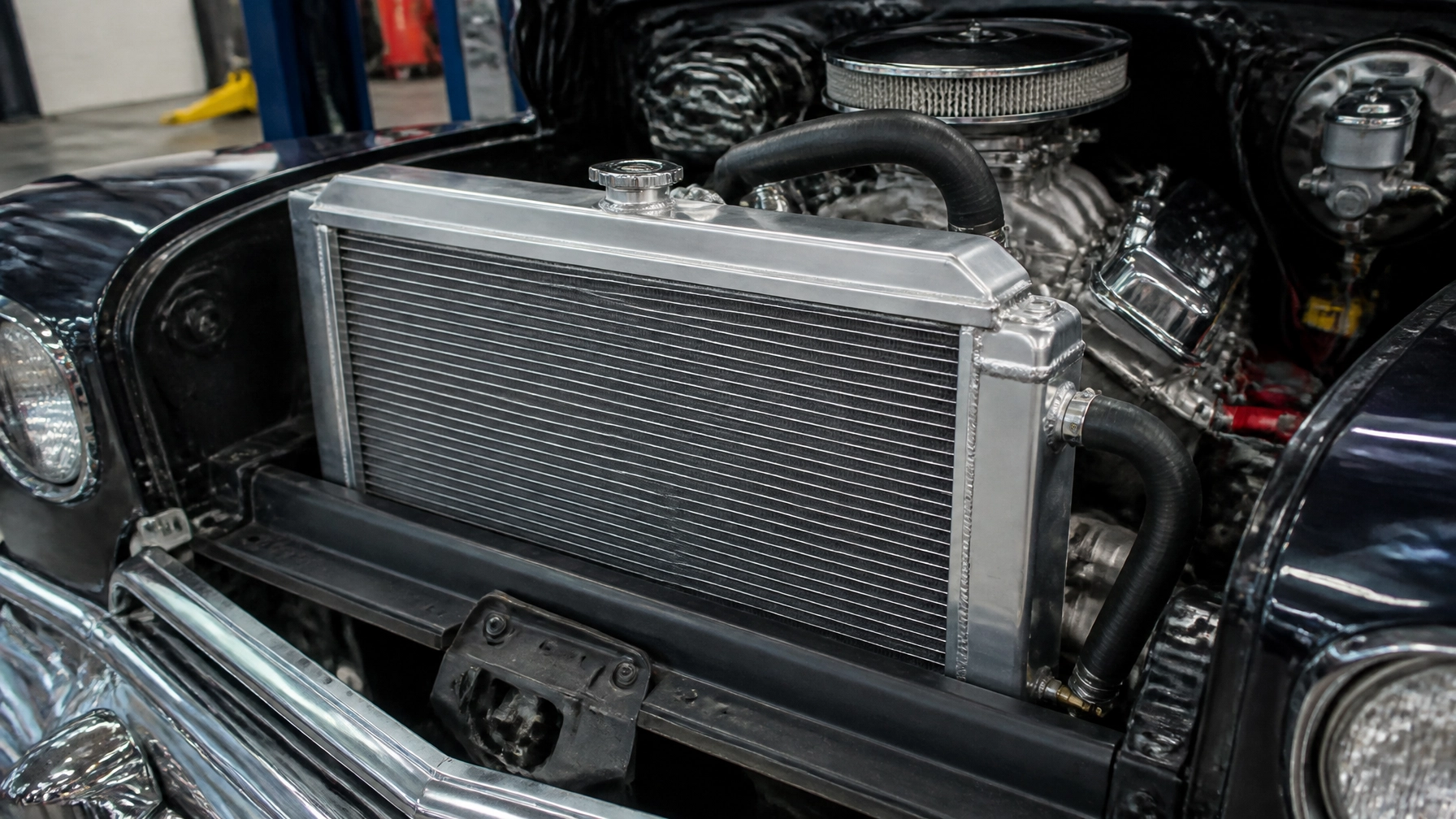
If you own a classic car or hot rod in Yuba City, you already know that summer driving can be hard on an older cooling system. A short cruise through town can turn into a long wait at a stoplight, and Sacramento Valley temperatures can push an engine far beyond the conditions it was designed to handle.
That is when a temperature gauge starts creeping upward.
The good news is that you have practical ways to improve cooling performance. Two of the most common upgrades are an electric radiator fan and a high-flow radiator. Both can help, but they solve different problems. Choosing the right one depends on when your vehicle overheats, how your engine is built, and how much room you have under the hood.
Here is how to compare the two before investing in a cooling upgrade.
First, Identify When Your Engine Runs Hot
Before buying parts, pay attention to the conditions that cause the temperature to rise. This simple observation can point you toward the right repair.
Overheating at Idle or in Traffic
If your classic car stays at a safe temperature while cruising but begins to run hot in stop-and-go traffic, airflow is likely the main issue.
At highway speed, air naturally moves through the grille and radiator. At idle, the cooling system depends heavily on the fan and shroud to pull air through the radiator. A mechanical fan may not move enough air at low engine speed, particularly if it is worn, poorly positioned, or missing a proper shroud.
In this case, an electric fan may provide the biggest improvement.
Overheating at Highway Speeds
If the engine runs hot even when you are moving steadily on Highway 99 or other open roads around Yuba City, the problem may not be airflow alone. The radiator could be too small, partially clogged, damaged, or unable to reject enough heat from a modified engine.
A high-flow radiator is usually the better starting point when temperatures rise at sustained speeds.
Overheating Under Every Driving Condition
If your hot rod overheats at idle, on the freeway, and during short trips, do not assume a larger fan or radiator will automatically fix it. The entire cooling system needs to be inspected.
Problems with ignition timing, fuel mixture, thermostat operation, water pump flow, coolant level, hoses, belts, or head gasket sealing can all contribute to overheating. Installing upgrades without diagnosing the original problem can become an expensive guessing game.
Electric Fans: Better Low-Speed Airflow
An electric fan uses a motor and temperature-controlled switch to move air through the radiator when needed. Unlike a belt-driven mechanical fan, it does not depend on engine RPM.
That makes it especially useful for classic cars that spend time idling in summer traffic.
Advantages of an Electric Fan
An electric fan can offer several benefits:
- Strong airflow at idle: The fan can run at full speed even when the engine is barely turning.
- Automatic operation: A temperature sensor can switch the fan on and off as coolant temperature changes.
- More installation flexibility: Electric fans can work well in custom engine bays where a mechanical fan has limited clearance.
- Reduced parasitic drag: Removing a belt-driven fan may free a small amount of engine power.
- Better compatibility with modifications: Electric fans can help compensate for added air conditioning, increased compression, or other performance upgrades.
For a hot rod with a tight grille opening, custom front end, or limited space between the water pump and radiator, an electric fan can also make packaging easier. A properly planned installation may require custom brackets or a fabricated shroud, which is where professional custom fabrication services can make a major difference.
Puller Fans, Pusher Fans, and Shrouds
When there is enough room behind the radiator, a puller fan is generally the preferred arrangement. It sits behind the radiator and draws air through the core. This setup usually creates less restriction to natural airflow while the vehicle is moving.
A pusher fan mounts in front of the radiator and pushes air through it. This can be useful when rear clearance is limited, but the fan and its mounting hardware may obstruct some incoming airflow at highway speed.
Whichever style you choose, the shroud matters. Without a correctly fitted shroud, a fan may pull air around the radiator instead of through the cooling fins. Gaps between the shroud and radiator can also allow hot underhood air to recirculate.
A fan should be properly sized for the radiator core and engine. Bigger is not always better if the fan does not fit correctly, covers the wrong area, or places too much demand on the vehicle’s electrical system.
Electrical Capacity Matters
Electric fans draw substantial current when they start and run. Before installation, the alternator, wiring, fuses, relays, and battery connections should be checked.
A high-output V8 with air conditioning, upgraded headlights, an electric fuel pump, and other accessories may need more charging capacity than the original electrical system was designed to provide. A fan that cools well but causes voltage drops or overheated wiring is not a successful upgrade.
High-Flow Radiators: A Stronger Heat-Rejection Foundation
A high-flow radiator is designed to move coolant efficiently and transfer more heat into the surrounding air. Many modern units use efficient aluminum cores and improved tube-and-fin designs while still being available in configurations that work with classic engine bays.
The radiator is the foundation of the cooling system. If it cannot absorb and release enough heat, adding a more powerful fan may only provide a partial solution.
When a Radiator Upgrade Makes Sense
Consider prioritizing a high-flow radiator if:
- The original radiator is corroded, leaking, or partially clogged.
- The radiator has been repaired repeatedly.
- The engine has more horsepower or displacement than the original vehicle.
- You added air conditioning or other accessories that increase heat load.
- Temperatures rise during highway driving.
- The existing radiator is visibly undersized for the engine.
- The vehicle has a history of overheating despite good airflow.
A larger or more efficient radiator can provide the extra cooling margin your classic needs during a long summer drive through Yuba City, Marysville, or the surrounding Sacramento Valley.
However, radiator size alone does not guarantee better results. The unit must fit the engine’s coolant capacity and flow requirements. Hose routing, inlet and outlet locations, thermostat selection, water pump design, and airflow through the grille all need to work together.
Electric Fan vs. High-Flow Radiator: Which Should You Choose?
The simplest way to compare these upgrades is to match the part to the symptom.
| Your vehicle’s symptom | Upgrade to consider first |
|---|---|
| Runs hot only at idle or in traffic | Electric fan with a properly sealed shroud |
| Runs hot at highway speeds | High-flow radiator and cooling-system inspection |
| Runs hot with both airflow and vehicle speed | Full cooling-system diagnosis |
| Recently received an engine or A/C upgrade | High-flow radiator, possibly paired with an electric fan |
| Has limited room for a mechanical fan | Properly sized electric fan |
| Has an old, damaged, or restricted radiator | High-flow radiator |
For many classic V8s, the best long-term setup is not an either-or decision. A modern high-efficiency radiator paired with a thermostatically controlled electric puller fan can provide dependable cooling both on the freeway and in traffic.
The radiator handles heat rejection. The fan ensures air keeps moving when the car is barely moving.

Do Not Overlook the Supporting Components
Cooling upgrades work best when the rest of the system is healthy. During an inspection, a technician should also check:
- Radiator cap pressure and condition
- Thermostat operation
- Water pump performance
- Coolant concentration and condition
- Upper and lower radiator hoses
- Drive belts and pulleys
- Ignition timing and advance
- Carburetor or fuel-injection calibration
- Head gasket and combustion-gas concerns
- Grille, shroud, and air-sealing design
A lean fuel mixture or incorrect ignition timing can make an engine run hotter than expected. A slipping belt can reduce water pump speed. A soft lower hose may collapse under load and restrict coolant flow. These details matter, particularly in an older vehicle with a custom engine combination.
If you are unsure where the problem begins, a classic car repair shop in Yuba City can test the system before you spend money on parts that may not address the real issue.
Plan the Upgrade Around How You Drive
A show car that only travels a few miles at night has different cooling needs than a hot rod driven across the valley in July. Think about your normal use:
- Do you drive mostly in town or on the freeway?
- Does the car have air conditioning?
- Has the engine been rebuilt or modified?
- Is the grille opening original or heavily customized?
- Do you spend time in parade traffic or at car shows?
- Is preserving a stock appearance important to you?
For an original-looking restoration, a high-efficiency radiator designed to fit the factory location may offer modern cooling without changing the engine bay’s appearance. For a heavily customized build, an electric fan, fabricated shroud, and revised radiator mounting may create a cleaner and more effective solution.
The right answer is the one that suits the vehicle: not simply the part with the biggest advertised numbers.
Keep Your Hot Rod Cool With Help From Grumpy’s
Yuba City summer heat does not have to keep your classic car parked in the garage. Whether your vehicle needs better idle airflow, a more capable radiator, custom brackets, or a complete cooling-system diagnosis, the upgrade should begin with an inspection and a clear plan.
At Grumpy’s Hot Rod & Auto Repair, our ASE-certified team works on classic cars, hot rods, performance vehicles, and everyday drivers. We can help you determine whether an electric fan, high-flow radiator, or combination setup makes sense for your build. We also provide general maintenance, engine work, diagnostics, dyno tuning, and custom fabrication for vehicles throughout Yuba City and nearby communities.
If your temperature gauge has been climbing during summer cruises, do not wait for an overheated engine to become major damage. Contact Grumpy’s today to schedule a cooling-system inspection and keep your ride ready for the next drive.
Related Posts
Tires Wearing Unevenly? 5 Reasons It Isn’t Just Your Alignment
You check your tires and spot a bald strip along one edge, or notice one tire is wearing out months before the others. That’s frustrating, especially when you’re facing the cost of replacement tires sooner than expected. Alignment can cause…

Battery vs. Alternator vs. Starter: Which One Is Killing Your Morning Commute?
You’re ready to leave, but your car answers with a click, a slow groan, or nothing at all. A no-start is frustrating, and it can be expensive if you replace the wrong part. The battery, alternator, and starter all play…

7 Warning Signs Your Brakes Are About to Fail (and the Real Cost of Waiting)
Your brakes are the one system you cannot afford to ignore. You can postpone a cosmetic repair or drive a little longer before scheduling a maintenance item, but braking problems are different. Every commute, school run, grocery trip, and stop-and-go…