


Battery vs. Alternator vs. Starter: Which One Is Killing Your Morning Commute?
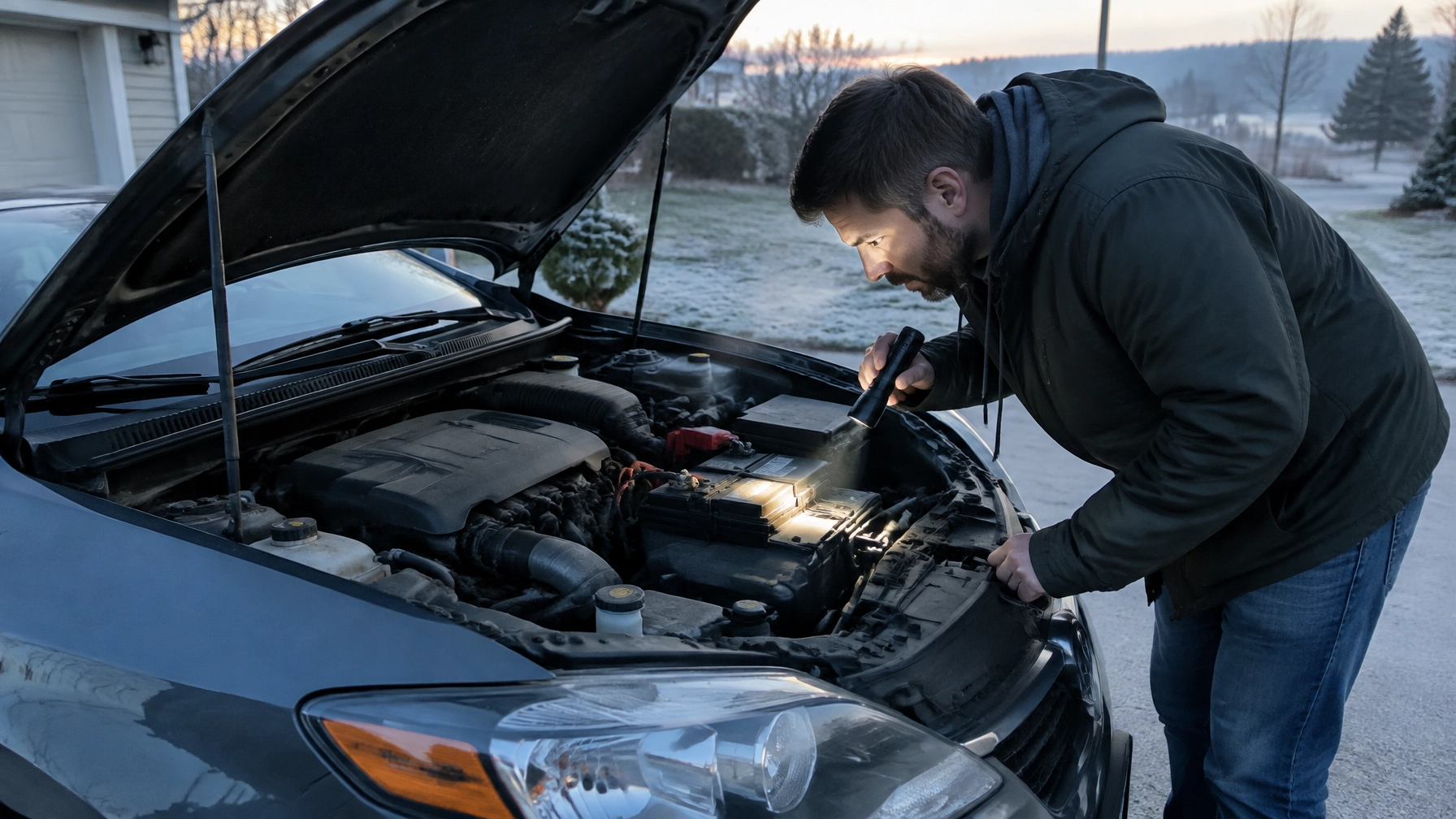
You’re ready to leave, but your car answers with a click, a slow groan, or nothing at all. A no-start is frustrating, and it can be expensive if you replace the wrong part. The battery, alternator, and starter all play a role in getting you on the road, but each does a different job.
Here’s how to make sense of the symptoms, what you can safely check yourself, and when it’s time for a proper test at an auto repair shop in Yuba City, CA.
Three parts, three different jobs
Think of the battery as the power source that gets the engine started. The starter uses that power to turn the engine over. Once the engine is running, the alternator helps power the vehicle’s electrical systems and recharge the battery.
Because those parts rely on one another, symptoms can overlap. A weak battery can make a healthy starter sound bad; a faulty alternator can leave you with a drained battery; and a bad connection can imitate either problem. Testing is more dependable than guessing.
What the symptoms may be telling you
Slow cranking or rapid clicking: start with the battery and connections
If the engine turns over sluggishly, or you hear a fast series of clicks when you turn the key, the battery may not have enough power. Loose or corroded battery terminals can cause similar symptoms by interrupting the current.
A battery that struggles after the car has been parked overnight deserves attention, especially if it’s several years old. Many car batteries last around three to five years, but heat, driving habits, and vehicle use can shorten that. In Yuba City, summer heat can take a toll over time; a cooler fall or winter morning may simply reveal a battery that was already weakening. AAA’s guide to battery life and Consumer Reports’ explanation of heat-related battery wear explain why climate matters.
A single click or no crank: the starter may be involved
If the dash lights come on but the engine doesn’t turn over, listen closely. A single solid click can point to the starter or its electrical circuit, but a weak battery, poor cable connection, relay, or other starting-system issue can also cause a no-crank.
Grinding or a whirring sound without the engine turning over can indicate a problem with how the starter engages. Don’t keep trying if you hear grinding, smell something burning, or see smoke. Repeated attempts may make a repair worse.
Dim lights or electrical oddities while driving: check the charging system
The alternator supplies power while the engine is running. A charging-system warning light, headlights that grow dim at idle, flickering dashboard lights, or accessories acting unpredictably may point to an alternator or charging-system issue.
A car that starts after a jump but soon stalls or won’t restart may also have a charging problem. But a jump-start is only a clue, not a diagnosis: the battery, connections, belt, and charging system all need to be checked.

Two simple checks, and what they can’t prove
Before checking anything under the hood, park safely, switch off the ignition, and consult your owner’s manual. Don’t touch a battery that’s leaking, swollen, or visibly damaged.
Try a headlight check. With the engine off, switch on the headlights. If they look unusually dim, the battery may be discharged or there may be a connection problem. If you have someone to assist, watch the lights while they turn the key. A dramatic drop in brightness can suggest low battery power, a poor connection, or a starter drawing excessive current. If the lights stay fairly bright but the engine doesn’t crank, the starter or its control circuit becomes more plausible.
This is only a rough screening check: headlights draw far less power than a starter, so their brightness can’t confirm which part has failed.
Notice what happens after a jump-start. If the engine starts, that tells you the car lacked enough power to start at that moment. It doesn’t prove the battery itself is bad. A shop can test the battery under load, inspect the connections, and check alternator output to distinguish a weak battery from a charging problem.
Only jump-start a conventional vehicle if you’re comfortable with the procedure and the owner’s manual allows it. Follow the manual’s instructions and use the correct connection points. If the vehicle still won’t start, or you’re unsure, stop and get professional help.
What might replacement cost?
Costs vary substantially by vehicle, part quality, labor, and how difficult the job is. As broad U.S. budgeting estimates, not quotes, a battery replacement may run roughly $150–$475, an alternator replacement about $350–$1,500 or more, and a starter replacement around $250–$900. See these 2026 starter and alternator estimates and starter replacement cost guidance for examples of how widely prices can vary.
Your actual estimate may differ. Some vehicles require a specific battery type or additional setup after installation; alternator and starter access also varies. A diagnostic test before replacing parts can help you avoid paying for a repair that won’t fix the problem.
Get the cause checked before you miss another morning
If your car is slow to crank, clicks without starting, or shows electrical symptoms, don’t let guesswork decide which part gets replaced. Battery, starter, and charging-system problems can sound alike, but a measured diagnosis can help narrow down the real cause.
Grumpy’s Hot Rod & Auto Repair handles battery replacements and vehicle diagnostics for everyday drivers in Yuba City, CA. Contact the shop to arrange an inspection, or book an appointment. A proper check now can help you get back to your commute with more confidence.
Tires Wearing Unevenly? 5 Reasons It Isn’t Just Your Alignment

You spot a worn strip along one edge of a tire, or feel a vibration that wasn’t there last week. It’s tempting to blame the alignment and book an adjustment. But uneven tire wear can also come from incorrect pressure, worn suspension parts, wheel imbalance, or a damaged wheel.
The tread pattern can offer useful clues, but it can’t confirm the cause by itself. Here are five common reasons tires wear unevenly, what to look for, and why a thorough inspection matters for drivers in Yuba City, CA.
1. Tire pressure is too low or too high
Pressure that’s consistently off can wear a tire unevenly and affect handling.
What you may see: Underinflation often wears both outer shoulders more heavily. Overinflation can wear the center of the tread faster than the edges.
Check the pressure when the tires are cold and compare it with the vehicle manufacturer’s recommendation on the door-jamb label or in the owner’s manual. The number molded onto the tire’s sidewall is generally the tire’s maximum pressure, not the recommended setting for your car.
If pressure drops again after you correct it, there may be a slow leak, puncture, or valve issue. Correcting the pressure is simple; finding the reason it changed may take a closer look.
2. Worn shocks, struts, or steering and suspension parts
Shocks and struts help control wheel movement over bumps. When worn, a tire can bounce more than it should and develop irregular, scalloped wear. Worn ball joints or bushings can let the wheel shift under load, changing how the tire meets the road.
What you may notice: Cupping, clunking over bumps, wandering, or a loose feeling through the steering wheel. These signs don’t point to one part with certainty, but they’re good reasons to have the suspension inspected.

3. Alignment settings have moved out of specification
A pothole, curb impact, or worn component can affect alignment. If a tire’s inner or outer edge is wearing faster than the rest, alignment geometry may be one cause. Feathering, where tread blocks feel smoother in one direction than the other, can also be associated with incorrect toe settings.
An alignment adjustment is not a fix for loose or bent components. If a ball joint, bushing, or tie rod is worn, the wheel’s position can keep shifting. The shop should check the steering and suspension first, repair any problems it finds, then align the vehicle as needed.
4. A wheel is out of balance, or bent
A wheel and tire that aren’t balanced properly can vibrate at certain speeds. A bent rim can cause vibration too, especially after hitting a pothole or curb, and may contribute to irregular tire wear. Balancing won’t straighten a bent wheel.
If the vehicle vibrates through the steering wheel or seat, mention when it happens and whether it began after an impact or tire service. That detail can help the technician narrow down what to inspect.
5. Driving habits and road conditions are adding stress
Hard cornering, sudden braking, frequent rough-road impacts, and carrying heavy loads can all contribute to faster or uneven wear. These factors don’t necessarily mean you’ve done anything wrong; they’re part of how a vehicle is used. Tire rotation, when appropriate for your vehicle and tire setup, can help spread wear more evenly, but it won’t repair an underlying mechanical issue.
Read the pattern, then get the cause confirmed
Use these patterns as clues, not a verdict:
- Center worn more than the shoulders: Check for persistent overinflation.
- Both shoulders worn: Check for underinflation or a leak.
- One edge wearing faster: Ask for alignment and suspension checks.
- Feathered tread blocks: Have alignment geometry inspected.
- Cupped or scalloped patches: Ask about shocks, struts, balance, and wheel condition.
Several issues can exist at once. For example, a worn suspension part can affect alignment, while a tire may also be underinflated. A technician can measure tread depth across the tire, inspect for damage, check wheel condition and balance, and look for play in steering and suspension components.
If the tire has exposed cords, a bulge, serious damage, or rapidly worsening wear, don’t keep driving on it without an inspection. Uneven wear can shorten tire life, reduce grip, and affect how your car handles. The Michelin tire-wear guide and Monroe’s explanation of suspension-related wear offer additional background on common patterns.
What could the repair cost?
The total depends on what inspection finds. As rough U.S. budgeting ranges, not a quote, an alignment may cost about $80–$200, while wheel balancing is often around $15–$50 per wheel. Tire prices vary by size and type, and worn suspension or steering parts can add significantly to the bill. For context, see RepairPal’s wheel alignment estimate and ConsumerAffairs’ suspension repair guide.
A shop should explain what it found before recommending repairs. Replacing tires or aligning the car without addressing a loose component or damaged wheel may allow the wear to return.
Protect your tires with a proper inspection
If you notice an odd tread pattern, steering pull, vibration, or repeated pressure loss, don’t assume alignment is the whole story. Checking tire pressure and wear is a good start; an inspection can help uncover the cause before it costs you another set of tires.
Grumpy’s Hot Rod & Auto Repair offers tire and wheel care, alignment, and suspension service in Yuba City, CA. Contact the shop to discuss an inspection, or schedule an appointment. Getting the cause checked is the best next step toward safer handling and more even tire wear.
Related Posts
Tires Wearing Unevenly? 5 Reasons It Isn’t Just Your Alignment
You check your tires and spot a bald strip along one edge, or notice one tire is wearing out months before the others. That’s frustrating, especially when you’re facing the cost of replacement tires sooner than expected. Alignment can cause…


7 Warning Signs Your Brakes Are About to Fail (and the Real Cost of Waiting)
Your brakes are the one system you cannot afford to ignore. You can postpone a cosmetic repair or drive a little longer before scheduling a maintenance item, but braking problems are different. Every commute, school run, grocery trip, and stop-and-go…
Your Check Engine Light Is Blinking: Here’s What to Do in the Next 10 Minutes
You’re driving through Yuba City, heading down Highway 99, crossing town on State Route 20, or simply making the daily commute when the check engine light starts blinking. That is not the same as a steady check engine light. A…