


Tires Wearing Unevenly? 5 Reasons It Isn’t Just Your Alignment
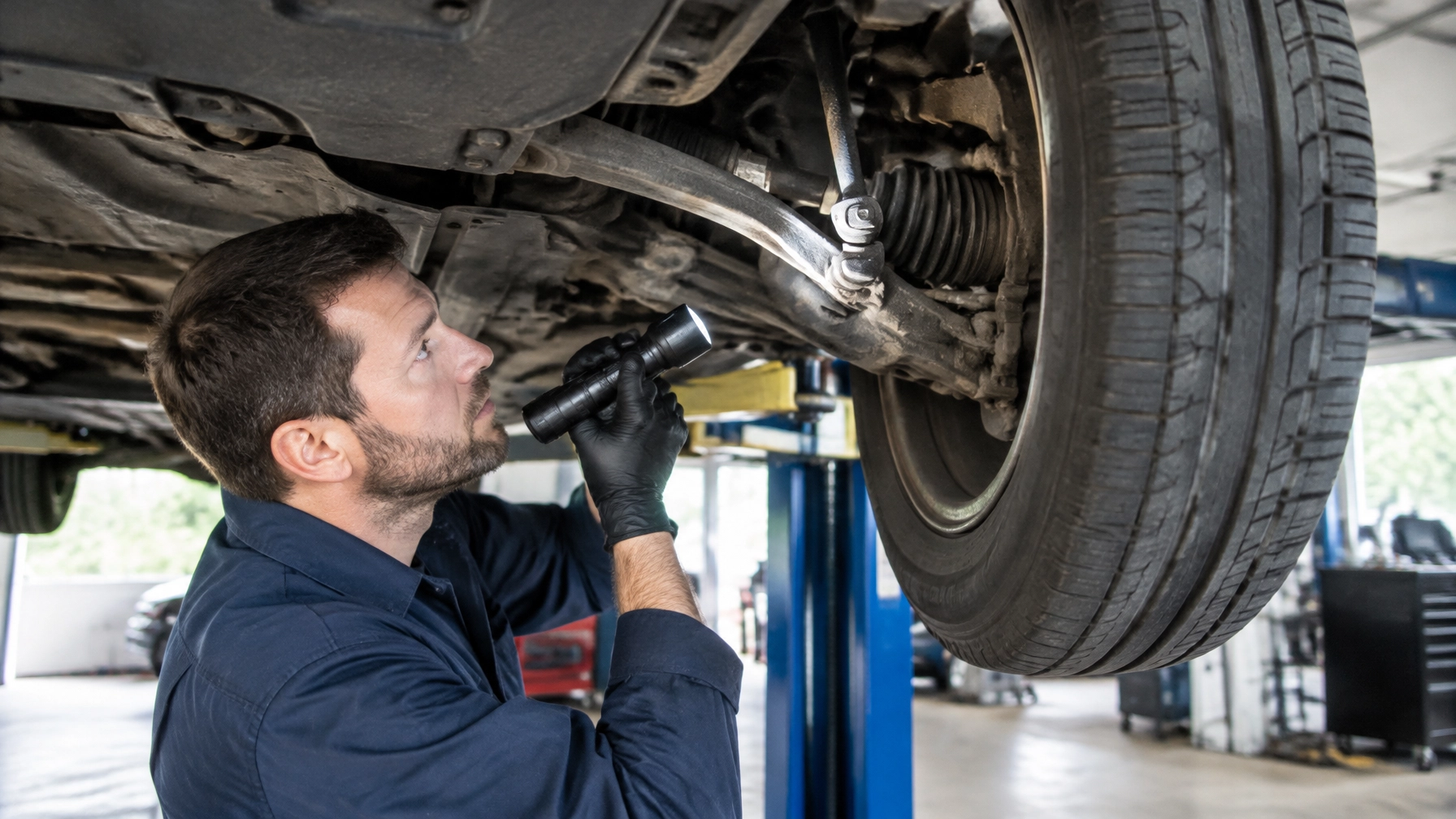
You check your tires and spot a bald strip along one edge, or notice one tire is wearing out months before the others. That’s frustrating, especially when you’re facing the cost of replacement tires sooner than expected.
Alignment can cause uneven wear, but it isn’t the only possibility. Tire pressure, worn suspension parts, wheel balance, wheel damage, and the way you drive can all play a role. Finding the cause matters: replacing tires without correcting the underlying problem can put you right back in the same position.
Five reasons your tires may be wearing unevenly
1. Tire pressure is too low, or too high
Pressure problems are easy to overlook, yet they can affect how much of the tread touches the road.
When a tire is underinflated, its outer shoulders may wear faster than the center. When it’s overinflated, the middle of the tread may wear faster than the edges. These are common clues, not foolproof diagnoses; other issues can create similar patterns.
Check pressure when the tires are cold and use the vehicle manufacturer’s recommended PSI, usually listed on the driver-side door-jamb label. Don’t use the maximum pressure molded onto the tire as your everyday target. If one tire keeps losing air, it may have a puncture, a leaking valve, or a sealing problem that needs inspection.
2. Worn shocks or struts let the tire bounce
Shocks and struts help keep your tires planted as the suspension moves. When they’re worn, a wheel may bounce instead of tracking smoothly over the road. That movement can leave a scalloped or cupped pattern: alternating high and low spots around the tread.
You might also notice a bouncy ride, extra movement after a dip, or a tire that looks wavy when you run your hand over it. A technician can check the tire and suspension to see whether worn dampers, another issue, or both are contributing.
3. Steering or suspension parts have play
Ball joints, control-arm bushings, and tie-rod ends help hold the wheels in the right position. When these parts wear or loosen, the wheel can shift as you drive. That can change its angle or direction and scrub tread away unevenly.
Possible clues include feathering, where tread blocks feel smoother in one direction than the other, or wear concentrated along an inner or outer edge. You may also feel looseness in the steering, hear clunks over bumps, or notice the vehicle wandering. Those symptoms deserve attention; loose steering or suspension parts can affect control as well as tire life.
4. A wheel is out of balance or bent
A wheel that’s out of balance can cause vibration, often at certain speeds. That vibration may contribute to irregular wear over time, though it doesn’t explain every patchy tread pattern. A bent wheel can also create vibration and, in some cases, contribute to an air leak.
If the steering wheel or seat shakes at speed, or a tire repeatedly loses pressure after a hard impact, have the wheel and tire checked. Balancing may resolve a balance problem, but a damaged wheel needs a closer look; a cracked wheel should not be treated as a simple balancing issue.
5. Driving habits and road conditions add stress
Hard cornering, heavy loads, and frequent impacts can increase tire and suspension stress. A pothole or rough patch of road may damage a tire or bend a wheel, while repeated sharp turns can wear the outer shoulders more quickly.
These factors don’t automatically mean you’re doing something wrong. They’re simply part of the picture. The best next step is to inspect the tire and check for mechanical causes rather than assume driving style is to blame.
How to read common tire-wear patterns
Tread can offer useful clues, but it’s not a substitute for a proper inspection. Look across the full width of each tire and compare the tires on the same axle.
- Inner or outer edge wear: May point to alignment angles, worn steering or suspension parts, or another setup issue. The specific pattern matters.
- Center wear: Can be a sign of overinflation.
- Wear on both shoulders: Can be a sign of underinflation.
- Cupping or scalloped spots: May involve worn shocks or struts, wheel imbalance, or other tire-and-wheel problems.
- Feathered tread blocks: Can be associated with toe misalignment, where a wheel points slightly inward or outward as it rolls.
A tread-depth gauge can help measure what your eyes may miss. But if the pattern looks uneven, identifying the reason is more useful than simply measuring how much tread remains.

Why waiting can cost you twice
Uneven wear can shorten the life of a tire, but the worn tire may be only half the bill. If a pressure leak, damaged wheel, worn suspension part, or alignment problem remains, it can continue damaging the next set.
As a broad budgeting guide, a pressure adjustment may cost little or nothing if no leak needs repair. Tire balancing is often around $20–$60, while a four-wheel alignment may be roughly $80–$170. Repairing a bent, repairable wheel can be approximately $75–$250. Suspension work varies widely: a tie-rod-end replacement with alignment may run around $340–$475, a ball-joint repair may be roughly $300–$500, and replacing a pair of shocks or struts may be around $550–$1,400 before alignment.
These are general estimates, not quotes for your vehicle. The make and model, parts selected, condition of related components, labor, and whether alignment is needed can all change the final cost. Ask for a written estimate before authorizing repairs. California’s Bureau of Automotive Repair outlines consumer information about estimates and repair authorization.
When a professional inspection is worthwhile
Get the tires checked if wear is noticeably different from one side to the other, the steering wheel shakes, the car pulls, or you hear clunks over bumps. It’s also worth scheduling an inspection after a significant pothole or curb impact, or when a new tire starts losing pressure repeatedly.
A useful inspection looks beyond the tread. It can include tire pressure and condition, wheel balance and damage, steering and suspension components, and alignment, especially if a worn part needs to be repaired first. That way, you’re not paying for an adjustment that can’t hold because something is loose.
If a tire has a bulge, exposed cords, a deep cut, or severe vibration, don’t put off having it assessed. Damage can make a tire unsafe, and a professional can help you decide whether the vehicle should be driven.
Get the cause checked before buying tires
Uneven tire wear doesn’t always mean your alignment is off. Pressure, worn shocks or struts, loose steering or suspension parts, wheel problems, and road impacts can all leave their mark. Catching the underlying issue early gives you a better chance of protecting your next set of tires, and avoiding repair costs that grow while the problem goes unchecked.
If you’ve spotted unusual wear or felt a new vibration, arrange a tire and suspension inspection with Grumpy’s Hot Rod & Auto Repair in Yuba City, CA. We’ll help identify what needs attention and explain your options before work begins.
Related Posts
Battery vs. Alternator vs. Starter: Which One Is Killing Your Morning Commute?
You’re ready to leave, but your car answers with a click, a slow groan, or nothing at all. A no-start is frustrating, and it can be expensive if you replace the wrong part. The battery, alternator, and starter all play…


7 Warning Signs Your Brakes Are About to Fail (and the Real Cost of Waiting)
Your brakes are the one system you cannot afford to ignore. You can postpone a cosmetic repair or drive a little longer before scheduling a maintenance item, but braking problems are different. Every commute, school run, grocery trip, and stop-and-go…
Your Check Engine Light Is Blinking: Here’s What to Do in the Next 10 Minutes
You’re driving through Yuba City, heading down Highway 99, crossing town on State Route 20, or simply making the daily commute when the check engine light starts blinking. That is not the same as a steady check engine light. A…