




Why Your Car Heater Blows Cold Air (and What It’s Actually Costing You)
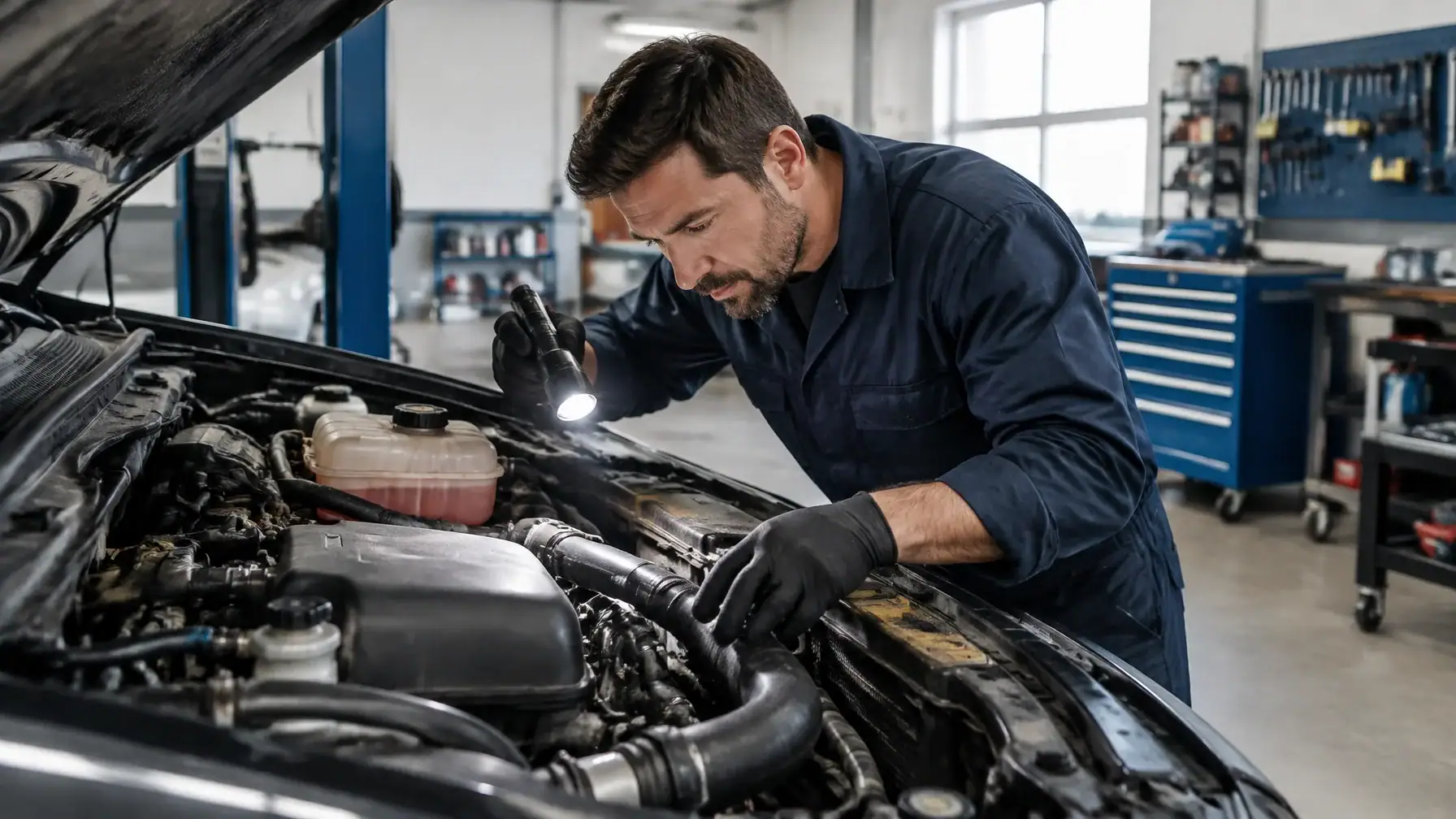
On a foggy Yuba City morning, a heater that blows cold air is more than an uncomfortable surprise. It can leave you waiting for the windshield to clear while you’re already late, and sometimes it’s an early clue that the engine’s cooling system needs attention.
The cause might be a simple control or airflow problem, or it could be low coolant, a thermostat issue, or a leaking heater core. The symptoms can overlap, so it’s worth identifying the actual fault before replacing parts.
How your car’s heater makes warm air
Your heater borrows heat from the engine. As the engine runs, it warms coolant, which circulates through a small radiator-like component behind the dashboard called the heater core. The cabin fan pushes air across the hot core and into the interior.
If warm coolant isn’t reaching the heater core, or air isn’t flowing across it properly, you may get chilly air instead of heat. That’s why a cold-air complaint can involve the engine’s cooling system, the cabin airflow, or the controls that direct air through the dash.

Common causes, and clues that help tell them apart
Low coolant or a leak
When coolant is low, there may not be enough hot fluid circulating through the heater core. You might notice the heater gets warmer when you accelerate, hear gurgling behind the dashboard, or spot a puddle or residue under the vehicle. A sweet smell under the hood can also point to a coolant leak.
Check the coolant level only when the engine is completely cool, and follow the instructions in your owner’s manual. Never remove a radiator cap or open a pressurized coolant reservoir while the engine is hot. If you need to add coolant repeatedly, don’t treat that as a fix: the system is losing fluid and the leak needs to be found.
A thermostat stuck open
The thermostat helps the engine reach and maintain its normal operating temperature. If it sticks open, coolant keeps circulating too freely while the engine warms up. The temperature gauge may take unusually long to rise or remain lower than normal, and the cabin heater may stay lukewarm.
This can look different from low coolant: the engine may simply be taking too long to get warm, rather than showing a clear leak. A mechanic can check whether the engine is reaching its expected temperature before recommending a thermostat replacement.
A failing or restricted heater core
A restricted heater core may not transfer heat effectively, so airflow from the vents stays cool or only mildly warm. If the core leaks, watch for a sweet coolant smell inside the cabin, persistent fog or a greasy film on the windshield, or damp carpet, often on the passenger side.
Those clues deserve prompt attention. A leaking heater core can mean lost coolant, and replacing the core may require substantial dashboard disassembly. A flush might help a restricted core in some cases, but it won’t repair a leaking one.
Air trapped in the cooling system
Air pockets can form after cooling-system work or when a leak lets air into the system. Since air can interrupt coolant flow through the heater core, the heat may come and go, change as engine speed changes, or be accompanied by gurgling behind the dashboard.
Properly bleeding and refilling the system can address trapped air, but the source should also be checked. If air keeps getting back in, there may be an unresolved leak or another cooling-system problem.
Blend-door or heater-control trouble
A blend door directs cabin air through, or around, the heater core. If the door, actuator, or control has a problem, the engine may warm up normally while the vents still deliver cold air. Heat on one side but not the other, or clicking from behind the dashboard when you change temperature settings, can point toward a blend-door issue.
Because these parts are tucked inside the dashboard, diagnosis may involve checking the controls and actuator operation rather than replacing cooling-system components.
A clogged cabin filter, or a blower problem
A dirty cabin air filter usually makes the airflow weak; it doesn’t typically make properly heated air cold. If you can feel a little warmth but barely any air comes through the vents, the filter may be restricted.
If the fan is silent, works only at certain speeds, or pushes very little air even with a clean filter, the blower motor or its electrical controls may need attention. This is an airflow issue, separate from whether the engine is making heat.
Don’t ignore a rising temperature gauge
A heater problem can sometimes accompany a cooling-system fault, and low coolant or poor circulation can put the engine at risk of overheating. Pay attention if the temperature gauge climbs above its normal range, a warning light comes on, you see steam, or the heater suddenly turns cold while the engine temperature rises.
If that happens, pull over somewhere safe and shut the engine off. Don’t open a hot cooling system. Continuing to drive an overheating vehicle can cause serious engine damage; arrange help rather than trying to nurse it along.
What might the repair cost?
The price depends on your vehicle, parts, labor, and how easy the affected component is to reach. These broad U.S. ranges are estimates, not quotes; diagnosis and related repairs can change the total.
| Possible repair | Typical estimated range |
|---|---|
| Coolant flush or service | $130–$300 |
| Thermostat replacement | $200–$700 |
| Heater-core replacement | $900–$2,000+ |
| Blower-motor replacement | $300–$650 |
A coolant flush is not the same as repairing a coolant leak, and it won’t fix a faulty thermostat, blend door, or blower motor. Likewise, heater-core replacement can cost more than a basic service because access may require removing much of the dashboard. The right first step is a diagnosis, not guessing at the most expensive part.
Grumpy’s offers diagnostics and inspections in Yuba City to help identify what’s behind a vehicle problem. Once the cause is clear, you can review the recommended work and estimate before deciding how to proceed.
Get ahead of foggy mornings
A working heater matters for comfort, but it also helps clear the windshield. In a car with fogged glass, the defroster directs air toward the windshield; warm air helps, and many vehicles also use the air-conditioning system to remove moisture. If the heater can’t provide heat, or the airflow is weak, you may wait longer for a clear view when visibility is already poor.
If your car is blowing cold air, losing coolant, or taking too long to warm up, don’t wait for the next foggy morning to investigate. Book a heater and cooling-system diagnosis with Grumpy’s Hot Rod & Auto Repair in Yuba City, CA. A clear diagnosis can help you understand the repair, the likely cost, and what it will take to get dependable heat back.
Related Posts

Fog Season Survival: How to Drive and Maintain Your Car Through Yuba City’s Tule Fog
In Yuba City, a clear-looking morning can turn into a foggy drive with very little warning. Tule fog can settle over roads in thick patches, shrinking your view and making it harder to judge speed, distance, and where the road…

Tires Wearing Unevenly? 5 Reasons It Isn’t Just Your Alignment
You check your tires and spot a bald strip along one edge, or notice one tire is wearing out months before the others. That’s frustrating, especially when you’re facing the cost of replacement tires sooner than expected. Alignment can cause…
Battery vs. Alternator vs. Starter: Which One Is Killing Your Morning Commute?
You’re ready to leave, but your car answers with a click, a slow groan, or nothing at all. A no-start is frustrating, and it can be expensive if you replace the wrong part. The battery, alternator, and starter all play…