


Your Check Engine Light Is Blinking: Here’s What to Do in the Next 10 Minutes
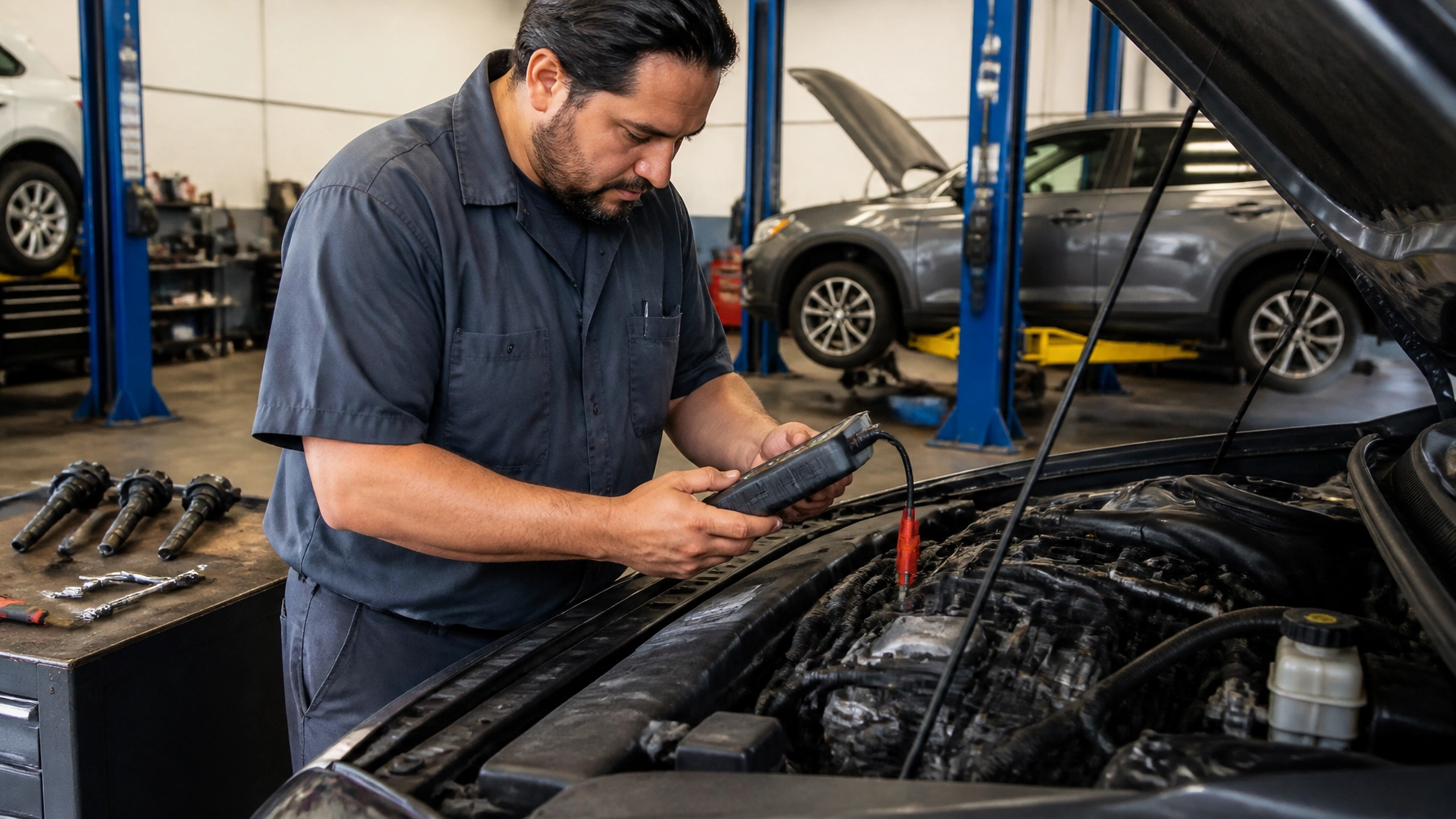
You’re driving through Yuba City, heading down Highway 99, crossing town on State Route 20, or simply making the daily commute when the check engine light starts blinking.
That is not the same as a steady check engine light.
A blinking: or red-flashing, depending on the vehicle: engine-shaped warning light usually means the engine is experiencing an active, severe misfire. Unburned fuel may be entering the exhaust, where it can overheat and damage the catalytic converter. In a matter of minutes, a problem that might have been relatively manageable can become a much more expensive repair.
The good news is that you can take the right steps immediately. Here’s what to do during the next 10 minutes: and when to call Grumpy’s Hot Rod & Auto Repair for check engine light diagnosis in Yuba City.
Blinking vs. steady: Why the difference matters
A steady check engine light generally indicates that the vehicle’s computer has detected a fault in the engine, emissions, fuel, or electronic control system. It still deserves attention, but if the car is running normally, you can often drive carefully for a short distance and schedule an inspection soon.
A blinking check engine light is more urgent. It typically indicates an active misfire severe enough to threaten the catalytic converter. The engine may shake, hesitate, lose power, or sound unusually rough. You may also notice a strong fuel smell from the exhaust.
A misfire occurs when one or more cylinders fail to burn the air-fuel mixture properly. Instead of being burned inside the engine, some of that fuel can pass into the exhaust. The catalytic converter is designed to process exhaust gases, not handle a steady supply of raw fuel. The result can be extreme heat and internal damage.
If the light is flashing, treat it as a stop-driving warning: not a reminder to check it sometime next week.
Your 10-minute action plan
Minute 1: Ease off the accelerator
The moment you notice the light blinking, take your foot off the gas and reduce engine load. Do not accelerate hard, use cruise control, tow anything, or try to “blow out” the problem by driving faster.
If the engine is shaking or the vehicle has lost power, stay calm. Focus on controlling the car and moving toward a safe place rather than diagnosing the problem while traffic is moving around you.
Minutes 2–4: Pull over safely
Turn on your hazard lights and signal before moving toward the shoulder, a nearby parking lot, or another safe pull-off. On a busy road around Yuba City, do not make a sudden maneuver just to stop immediately. Move carefully to the nearest safe location.
If you are on a freeway or a narrow shoulder, remain especially alert. Keep your seat belt on, and stay inside the vehicle if leaving it would put you close to traffic. If you are in an unsafe position, call roadside assistance or emergency services.
Minute 5: Shut the engine off: but only after you stop
Do not turn the ignition off while the vehicle is still moving. You may lose power assist for the steering and brakes, making the car more difficult to control.
Once you are safely parked and fully stopped, turn the engine off. Shutting it down stops the misfire and helps prevent additional raw fuel from overheating the catalytic converter.
Avoid repeatedly restarting the car to see whether the light goes away. One restart may not tell you much, and every additional minute of running with an active misfire can add heat and stress.
Minutes 6–8: Check for obvious danger signs
Without putting yourself at risk, look and listen for signs that the vehicle should not be restarted:
- Heavy shaking or severe engine vibration
- Smoke or steam from under the hood
- A strong gasoline smell
- Loud popping from the exhaust
- Loss of oil pressure or engine temperature warnings
- Burning smells or visible fluid leaks
- A major loss of power
If you see smoke, smell raw fuel, or notice a separate red warning light, stay clear of the vehicle and request roadside assistance.
Minutes 9–10: Arrange a tow and note what happened
Call your roadside assistance provider, insurance company, or a trusted towing service. Tell the driver that the check engine light was flashing and that the vehicle may have an active misfire. A flatbed may be the best option for some vehicles, especially modified cars, low hot rods, all-wheel-drive vehicles, or cars with drivetrain concerns.
Before the car is towed, write down what you noticed:
- Was the light blinking constantly or intermittently?
- Was the engine shaking?
- Did the problem start during acceleration, idle, or a hill?
- Did you smell fuel?
- Did the vehicle lose power?
- Did any other warning lights appear?
These details can help a technician narrow down the fault more efficiently.
What is usually wrong?
A blinking light does not identify one specific failed part. It tells you that the engine is misfiring badly enough to require immediate attention. Common causes include:
Worn or damaged spark plugs
Spark plugs ignite the air-fuel mixture inside each cylinder. A worn, fouled, damaged, or incorrectly gapped plug may fail to ignite the mixture consistently.
A failed ignition coil
Many modern vehicles use an individual ignition coil for each cylinder. When a coil fails, the affected cylinder may stop firing properly. The engine can begin shaking almost immediately, particularly under acceleration.
Fuel delivery problems
A clogged or failing fuel injector, low fuel pressure, or another fuel system problem can create a lean or overly rich mixture. Either condition may lead to a misfire.
Vacuum leaks or air-metering faults
Unmetered air entering the engine can upset the fuel mixture. Problems with sensors, intake leaks, or related controls may also cause rough running and misfire codes.
Mechanical engine problems
Low compression, a valve issue, timing problem, or internal engine damage can also cause a cylinder to misfire. That is why replacing a spark plug based only on a scanner code is not always a complete diagnosis.
A diagnostic trouble code such as P0300 or P0301 may point toward random misfire or a specific cylinder, but the code is only a clue. A professional technician needs to test the ignition, fuel, air, and mechanical systems to find the root cause.
Why driving farther can get expensive
The immediate concern is not only how poorly the engine is running. It is what the unburned fuel is doing downstream.
Catalytic converters operate at high temperatures as they convert harmful exhaust gases into less harmful compounds. When raw fuel enters the converter, it can ignite inside the unit and raise temperatures high enough to melt its internal material. Once the converter is damaged or clogged, the vehicle may lose power, run hotter, fail an emissions test, or require a costly replacement.
In other words, continuing to drive because “the car still moves” can turn an ignition or fuel problem into an ignition, fuel, and catalytic-converter repair.
That is also why clearing the code is not a real fix.
Don’t rely on these common myths
“I’ll disconnect the battery and reset the light”
Disconnecting the battery may erase stored information temporarily, but it does not repair the misfire. The light may return as soon as the vehicle’s computer detects the problem again. You may also erase useful diagnostic data and reset vehicle monitors.
“I’ll plug in an OBD-II scanner and keep driving if the code disappears”
An OBD-II scanner can be helpful for gathering information, but it does not make an unsafe vehicle safe. If the light was flashing, have the problem diagnosed before returning to normal driving. Do not clear the code just to pass the problem along to the next trip.
“It stopped flashing, so everything is fine”
A light that changes from flashing to steady may indicate that the severe misfire is no longer occurring at that moment. It does not mean the underlying issue has gone away. Avoid unnecessary driving and arrange an inspection as soon as possible.
When to call Grumpy’s in Yuba City
If your check engine light is blinking, call Grumpy’s Hot Rod & Auto Repair before driving the vehicle any farther than necessary to reach safety. We can help determine whether the vehicle should be towed in and perform a proper check engine light diagnosis in Yuba City.
Our team works on all makes and models except Teslas, from modern daily drivers and trucks to classic hot rods and performance vehicles. We can inspect the stored codes, verify the misfire, test the ignition and fuel systems, and check for damage that may have developed in the exhaust system.
You can learn more about our general maintenance and diagnostic services, meet the Grumpy’s team, or contact the shop to discuss your next step. Flexible financing options are also available for qualifying repairs, so an urgent problem does not have to be ignored because of an unexpected expense.

The bottom line
A steady check engine light means “schedule service.” A blinking check engine light means “reduce load, pull over safely, shut the engine off, and arrange professional help.”
Do not keep commuting around Yuba City, drive home from work, or head to the shop under your own power if the light is actively flashing. A tow and timely diagnosis may save you from catalytic-converter damage and a much larger repair bill.
If your engine light is blinking now, get somewhere safe and call Grumpy’s Hot Rod & Auto Repair. For dependable auto repair in Yuba City, our friendly team is ready to diagnose the problem and help get you back on the road with confidence.
Related Posts

7 Warning Signs Your Brakes Are About to Fail (and the Real Cost of Waiting)
Your brakes are the one system you cannot afford to ignore. You can postpone a cosmetic repair or drive a little longer before scheduling a maintenance item, but braking problems are different. Every commute, school run, grocery trip, and stop-and-go…

How to Choose the Best Cooling Upgrades: Electric Fans vs. High-Flow Radiators for Yuba City Summers
If you own a classic car or hot rod in Yuba City, you already know that summer driving can be hard on an older cooling system. A short cruise through town can turn into a long wait at a stoplight,…
Engine Problems You Shouldn’t Ignore: When to Bring Your Car in for Engine Repair in Yuba City
We’ve all been there. You’re driving down Highway 99, maybe heading toward the Sutter Buttes for a weekend hike or just commuting to work, when you notice something isn't quite right. Maybe there’s a slight hesitation when you hit the…